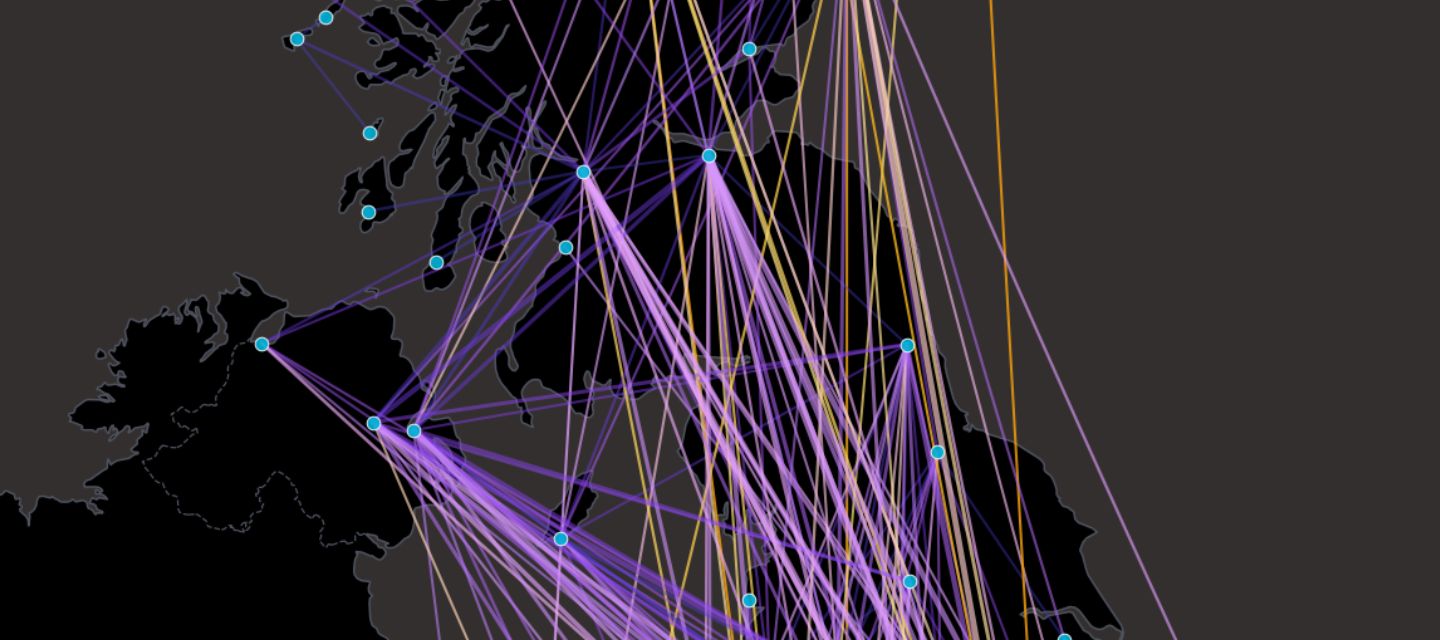
AEF interactive tool shines the spotlight on the potential for zero emission aircraft
29th October, 2026
Just a few years ago, zero emissions flight was firmly on the agenda. In fact, the UK Government’s Jet Zero Strategy predicted that one in every four aircraft taking off in 2050 would be zero emission, powered by either electric battery or hydrogen. In this context, ‘zero emission’ means that zero carbon emissions are produced in flight. It’s never that simple of course: zero carbon emission aircraft (ZEAs) powered by hydrogen can still produce contrails and other non-CO2 effects (see our previous work on this topic), and electricity and green hydrogen production needs to be based on surplus renewables. And for communities under flightpaths, there’s still the question of noise, especially as the dominant noise source on approach is often the airframe. But the potential benefits of ZEAs, and the limitations of other decarbonisation pathways for aviation, suggest it should be a high priority in any net zero strategy, and the case increases significantly beyond 2050. If we don’t make progress and investment now, the opportunity for low carbon flight may fail to materialise at scale.
But since 2023 when the AEF collaborated with the World Economic Forum on a Government toolkit on policies to encourage ZEA development, electric and hydrogen projects have been on a bumpy ride. Several R&D projects have been cancelled or scaled back, potentially delaying likely entry into service dates. In fact, the latest aviation forecasts from the UK Department for Transport show that ZEAs are likely to represent just 3% of the fleet in 2050 based on current trends, and 9% in an accelerated technology development scenario.
To some extent this pessimism is balanced by some great work by start-ups, hydrogen alliances and the task and finish groups set up under the Jet Zero Taskforce (AEF is pleased to be part of the current task and finish group looking at hydrogen infrastructure at airports which is expected to complete its work by the end of the year). To add to this knowledge, AEF has developed a tool to help explore and illustrate the UK domestic air route network and its potential to switch to ZEAs.
The tool allows users to explore the network using a set of variables that includes distance, aircraft size, route density, flight numbers and the associated CO2 savings. You can access the tool at the bottom of the page, or click here to use it in an enlarged format.
To demonstrate the tool, AEF has put together a short report highlighting how the generated maps can illustrate the potential for developing an initial ZEA network in the UK. The report, ‘Zero emission aviation in the UK: An Early Airport Network’, can be found here. It concludes that while the associated emissions savings are small, an initial ZEA route network, and the associated ground infrastructure needed for refuelling, charging and storage, are essential to unlock the potential for wider ZEA deployment in the UK.